

dyslexia&
SPLD Assessments


PATOSS Professional Member
(East Midlands)
Mr Ed Garnham BA(Hons), PGCE, CertEd (SPLD), DipPsych, CertEd (SLD/PMLD), DipCBSS, PPM
Dyslexia, Dyscalculia & SpLD Assessments Near Nottingham
I provide comprehensive, personalised assessments for dyslexia, dyscalculia and other Specific Learning Difficulties (SpLDs) for children, young people and adults. Based in Hucknall, near Nottingham, I take a wider approach to understanding learning differences, helping to identify overlapping difficulties without unnecessary appointments or repeated assessments.
One Comprehensive Assessment — £500 Fixed Fee
My assessments cost £500, regardless of the number or combination of learning difficulties identified.
Dyslexia and dyscalculia can overlap with difficulties involving attention, memory, processing and coordination. Rather than focusing narrowly on one concern, I consider the wider picture, including ADHD and dyspraxia (DCD), where appropriate.
This helps identify factors that may be contributing to difficulties and provides a clearer understanding of individual strengths and needs. Where further specialist investigation is necessary, I'll explain the options.
Personal Support from Start to Finish
-
You'll deal directly with me throughout. Every assessment is tailored to your individual circumstances, with time to discuss concerns, ask questions and receive initial feedback.
-
Following your assessment, you'll receive a comprehensive diagnostic report meeting relevant SASC standards, typically completed within one week.
-
Your report will include clear findings and practical, personalised recommendations to support learning, education, employment and everyday life.
-
I'm also happy to discuss the findings afterwards and offer further guidance where helpful.
One assessment. One fixed fee. Personal support throughout.
It's really important to make the experience as comfortable and reassuring as possible.
Many people feel a little nervous about an assessment. We need to create a calm and supportive environment where you (or your child) can feel at ease. We can go at whatever pace works best.
I have decades of experience working with young children, students, and adults of all ages, and no two assessments are fully alike.


As a certified SpLD assessor registered with PATOSS, the report is suitable for DSA Student Finance or Access to Work, and may be submitted as evidence for an EHCP or to support your child's school. You can check my registration using the SASC register, or by searching through the PATOSS Assessor tutor Index.
Please refer to the guidance below depending on your age and situation.
Children and Young People
(Under 16)
For younger people, the process will involve formal diagnosis of difficulties in Literacy (Dyslexia) or Maths (SpLD in Mathematics / Dyscalculia), but may also include a referral to their GP along with detailed advice in the report for supporting all identified needs. It’s important to respect professional boundaries when considering DCD or ADHD in children, as there are established paediatric pathways. However, I make sure that needs are communicated clearly and assertively. It is very useful to have all the information gathered, including a large amount of (psychometric) test results, and a conclusion about dyslexia when considering other conditions.
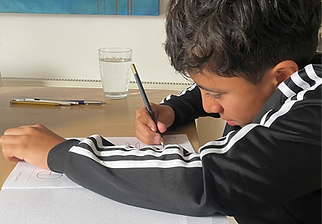
It can sometimes feel as though referrals are approached with unnecessary caution, but my experience in the NHS and with families over the years has shown that validated, well-considered referrals are extremely valuable. The focus for under-16s is often on:
-
anticipating potential challenges,
-
better understanding and motivation for the young person,
-
ensuring clear communication of needs to parents, schools, and professionals,
-
recommending appropriate support, and
-
helping to initiate any further referrals that may be required.
Difficulties are too often considered in isolation by different services. Bringing together all the information provides a clearer picture for everyone involved. This is my specialism.
Over 16 and Higher Education Students
For university students, my reports are used as formal evidence for access Disabled Students’ Allowance (DSA) / student finance support. However an assessment should be more than just evidence. I regularly provide assessments that identify SpLDs affecting learning, including attention and organisational skills, ensuring that students can access the support they need to thrive in higher education. My support often involves timely advice at this challenging time. Many people first notice that they need an assessment either here or at A-level for various reasons. Perhaps they have struggled through with extra effort, or felt they didn't quite get the grades they should have.
Here is a great video from the University of Nottingham which clearly explains all routes available for ADHD, as there are other options for assessing ADHD if you don't want to also assess dyslexia for example.
Contact me now or arrange a call back to discuss any questions you may have.

I provide educational assessments focussed on advice and engagement of full appropriate support for you as a student, so (as mentioned in the video) a bursary may be available for you to cover the costs. This is not a medical assessment leading to prescription medication. However it does enable student support servcies to enact a full range of extensive support mechansims for you, without delay, which is often very effective.
From my experience, Student Support Services at universities have been highly effective at supporting people. Their support is very wide ranging, experienced, practical and delivered at the location of need without delay, so this is always encouraged while you are a student. Given the complexity of these options, don't hesitate to get in touch via call or email for further clarification. Ensuring you're properly informed in this matter is crucial and I wouldn't take you on unless I thought I was the best match. I'm here for free advice if you are just feeling confused.
Contact me now or arrange a call back to discuss any questions you may have.
Adult/Workplace assessments
For those who have completed their education, the focus shifts to supporting them in life and the workplace. This may entail suggesting suitable alterations, engaging with coaching and CBT approaches and personal 'psychoeducation'. Many simply seek recognition and understanding.
Screening
This option may be suitable if you’re uncertain about whether a full diagnostic assessment is needed. In many cases, we can identify the possibility or risk of difficulties without going through the full process. Feel free to call me for a discussion, and together we can decide whether this is the right step. Sometimes, if I feel another route would be more appropriate (for example, if there are visual or hearing concerns), I may suggest a referral elsewhere.
In-person screening offers greater accuracy than the software-based systems often used in schools and universities. These programs can produce both false negatives and false positives, meaning they sometimes miss difficulties or suggest them where none exist. They can also be open to misinterpretation, as their focus is almost always too narrow.
The report you receive from screening is more concise than a full diagnostic assessment, which makes the process quicker and more affordable. However, I still use many of the same tests as I would in a full assessment, so if needed, it is straightforward to upgrade to a full report later. This is particularly important if formal evidence is required, and it is strongly recommended if dyslexia in particular identified.
While a full diagnostic assessment can be invaluable (especially for gaining access to support in education or the workplace) it isn’t always essential for everyone. Screening can therefore be a very useful first step.
